

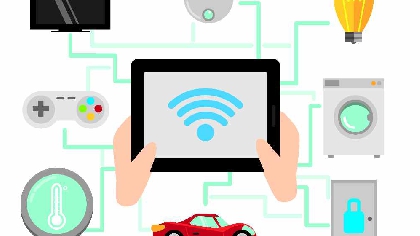
Hacking becomes easier as the number of WiFi controlled electronic items per household increases.
With the growing popularity of internet based household items, our homes are more connected than ever.
Heating, lighting and security systems which include cameras, alarms and motion senses can now be controlled by an app on your smartphone.
You can also purchase a refrigerator that automatically orders food for you when you run low.
Also on the increase are smart TVs and smart speakers which are linked to the internet and control house functions by voice command.
This technology is known as Internet of Things (IoT) which means the interconnection of household devices enabling them to send and receive data.
Even though IoT makes our lives easier, it also makes it easier for cyber criminals to access personal information to form part of a fraud scam.
They do this by releasing Remote Access Trojans (RATs) which are invisibly downloaded via a user requested programme or an email attachment then gain control of the device.
Detective Superintendent Aaron Duggan of Cheshire Constabulary states:
“Fortunately there are sensible and simple steps that can be taken to help protect against online criminals and RATs. The precautions are as simple as choosing strong, safe passwords, updating device operating systems and backing up data on a regular basis, making sure adequate antivirus/anti-spyware is installed and staying safe while online. For example, avoid revealing personal information such as your name and date of birth on social media.”
“Hackers used to only target computers and mobile devices, but now they’re turning to connected devices because they are a lot easier to hack in to. As long as people follow the simple measures to keep their technology – and importantly their information – secure, they should be safe from internet criminals."
A few are of the tips proposed for home security are:
- Always change the factory set password for a device to a password you have created yourself.
- Never use the same password for more than one device.
- Make sure all your internet based devices are up to date with internet security software which is protected by a passcode.
- Buy well-known brands as more care has probably been taken into the security measures of the product. .
- Install updates on your connected devices as soon as they become available. You can be alerted of these through the app associated with the device or via the manufacturer's website.
- Make sure your WiFi is secured- it should have a padlock symbol next to the network when searched on a device.
If you feel you have become a victim of fraud through your connected devices report it via www.actionfraud.police.uk .
 Man sentenced after assaulting woman in Knutsford
 Cheshire Foundation sponsors 1,000 ‘Leo the Lion’ children’s books for Macclesfield Hospital
 Consultation on Knutsford Town Council's Budget
 Police promoting road safety for all drivers and ensuring fitness to drive
 Call for stories of women and girls across Cheshire
 Cheshire officers working to keep our town centres even safer
 Life ban for woman whose dead dog was found in a rug in back garden
 Hartford man jailed following successful stop and search in Northwich
 Man jailed for historic sexual offences in Macclesfield
 Mayors’ cadet Jenson Webb embarks on a life changing Nepal expedition
 Man charged in relation to fatal collision involving off-duty police officer
 Ofsted highlights accelerating pace of improvement in Cheshire East children’s services
 Man sentenced following serious collision in Nantwich
 Two men sentenced for county lines drug dealing
 £50,000 fund opens to support safer communities across Cheshire
 Have your say on proposed changes to Council Tax Support in Cheshire East
 Three people jailed for more than 18 years following false imprisonment in Winsford
 New community mental health service launches across Cheshire East
 Highways teams are ready to keep Cheshire East moving this winter